


Lower Austria approves controversial emergency doctor reform: Eleven bases to be eliminated
Heute, 02:40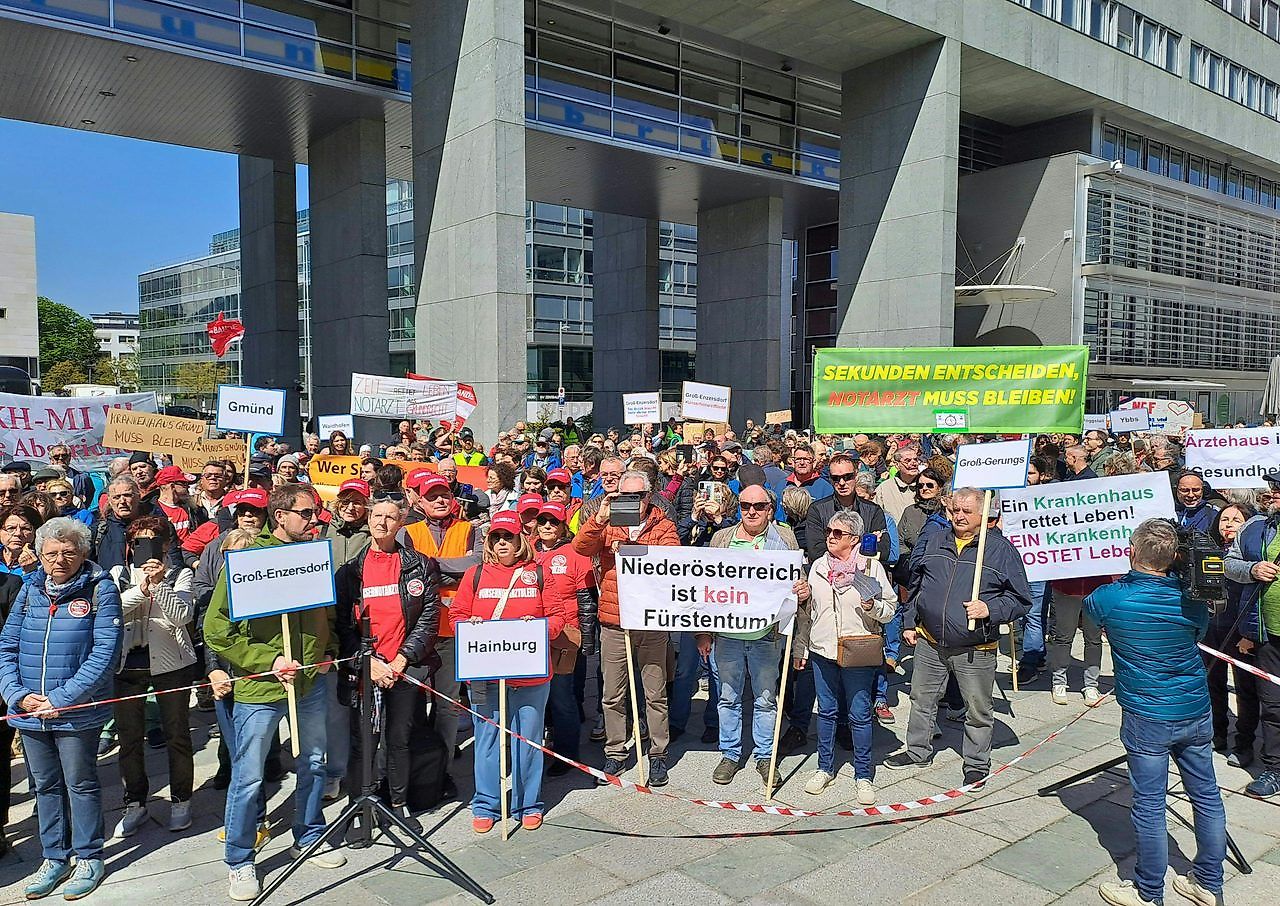
The reform of Lower Austria’s emergency medical and ambulance services, which has been controversial for months, has been approved. On Tuesday, the provincial government approved the necessary contracts, sealing the reduction in the number of emergency doctor bases from the current 32 to 21 in future.
The new structure is due to take effect on 1 April 2027. In return, the number of ambulance locations staffed by specially trained emergency medical technicians is to be increased.
Before the meeting, Governor Johanna Mikl-Leitner (ÖVP) had tasked provincial councillors Anton Kasser (ÖVP) and Martin Antauer (FPÖ) with submitting two outstanding contracts to the government meeting.
These are the contract for funding the ambulance service and the contract for emergency medical care. Both were approved on Tuesday.
Mikl-Leitner justified the move by saying that the province had to keep its word to the emergency services organisations. The Red Cross and the Arbeiter-Samariter-Bund had recently called for a swift decision.
The responsible SPÖ provincial councillor, Eva Prischl, was unable to attend the meeting due to illness. According to her office, she has been ill since the previous week.
Mikl-Leitner based the delegation of the task of submitting the contracts on Section 16 of the provincial government’s rules of procedure. This provides that the governor may assign another member of the government to carry out duties or report on a matter if a member of the government fails to fulfil their obligations.
After the meeting, Prischl is still expected to be responsible for the continued implementation of the emergency physician reform. A permanent removal of her powers was therefore not decided.
The core of the reform is a reduction from 32 to 21 emergency physician bases.
At the same time, the so-called RTW-C locations are to be expanded. Ambulances staffed by specially trained emergency medical technicians will be deployed there.
According to the statement submitted by the Austrian Society for Emergency and Disaster Medicine (ÖNK), the reform is not intended to worsen care. The number of RTW-C locations is to rise to around 87 in the long term.
The ÖNK argues that this will also allow teams to handle calls that do not necessarily require an emergency physician. The system will nevertheless continue to provide emergency physician coverage across the entire region.
The SPÖ in Lower Austria had recently opposed the closure of the eleven locations. Party leader Sven Hergovich cited an expert report commissioned by the SPÖ from emergency medicine specialist Matthias Fischer.
The report concluded that the longer travel distances for the remaining emergency physician teams could lead to poorer patient care.
This contrasts with the ÖNK’s assessment, which expects no deterioration in emergency care under the planned framework conditions.
The Red Cross and the Arbeiter-Samariter-Bund had repeatedly called for the reform to be implemented in recent days.
In a petition to the state parliament, the organizations called for the two agreements to be approved swiftly. Preparations for the new structure were already underway, including the training of emergency paramedics.
The state government’s decision has now ended the months-long political deadlock over the two agreements.
The new structure is set to take effect on April 1, 2027. By then, the organizational preparations must be completed and the new structures established.
The fundamental political decision has now been made. What remains to be seen is how the new structure performs in day-to-day emergency operations and how actual response and travel times change after the transition.
(APA/Ed.)
This article has been automatically translated, read the original article .

