


Dispute Over Vienna’s Napoleon Forest Lands in Supreme Court
Heute, 07:10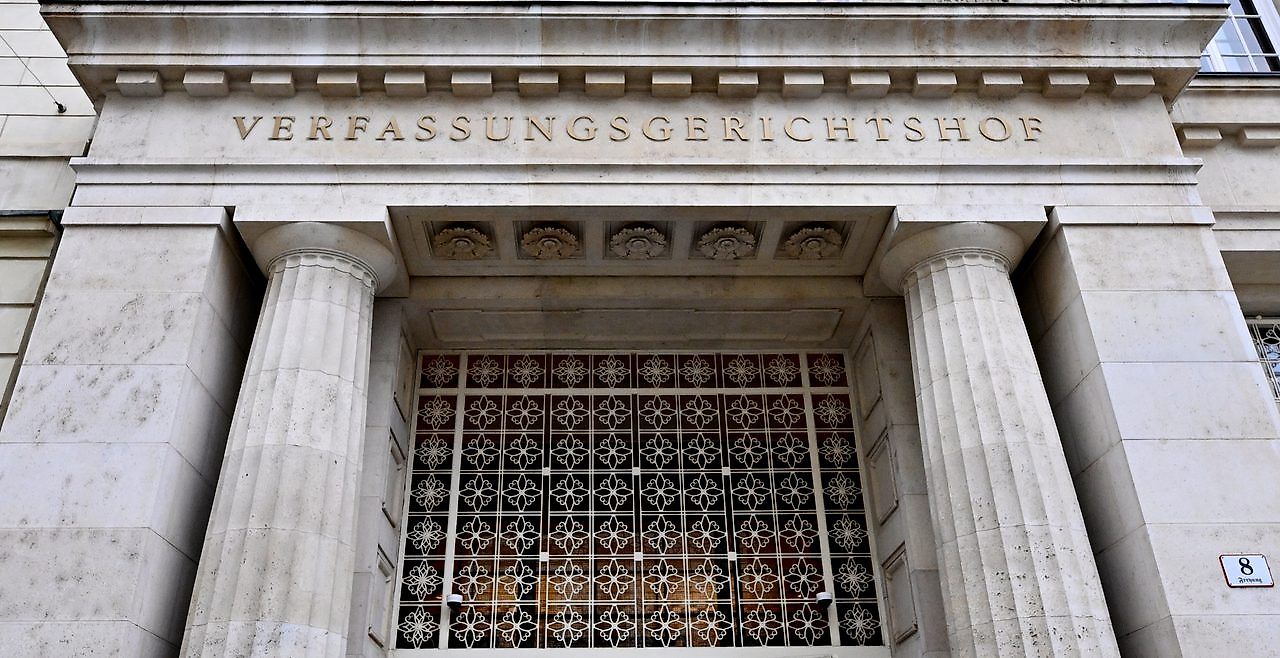
The years-long dispute over a planned construction project at the Napoleon Forest in Vienna-Hietzing is once again occupying the Constitutional Court (VfGH). A citizens‘ initiative wants to clarify whether the natural monument protection applies to the entire affected area or only to individual trees. This could determine how the legal basis of the planned residential and office complex is to be assessed.
Residents have been opposing the construction project for years. The Ombudsman has also become involved and sees indications of a grievance.
The conflict centers on a construction project on the site of a former inn on the edge of the Napoleon Forest in the 13th district of Vienna. The inn was closed about six years ago. A residential and office building with an underground garage is to be built on the site.
According to earlier information from ORF, the project includes 29 apartments and 13 offices. The planned building is to be approximately 60 meters long, up to twelve meters high, and up to 24 meters wide.
The citizens‘ initiative mainly criticizes the dimensions of the project. They fear negative impacts on nature, traffic volume, and the character of the surrounding residential area.
The legal dispute centers on the protection status of the Napoleon Forest. The citizens‘ initiative argues that the natural monument protection extends over a larger area and therefore the building regulations of the project must also be reviewed.
Their lawyer, Piotr Pyka, explained to ORF that the Constitutional Court could annul zoning and development plans. This is precisely what the residents he represents are aiming for.
The Constitutional Court had already dealt with the case before. In October 2026, the Vienna City Council also addressed a statement in connection with a request for reopening.
According to current information, there is no decision that would have revoked the building permit or ordered a construction halt.
The Ombudsman is also dealing with the construction project. According to Ombudsman Christoph Luisser (FPÖ), the authority has already identified a suspected grievance. However, the investigation process is not yet complete.
From the Ombudsman’s perspective, the City of Vienna may have issued a building permit for an area that falls under the existing protection ordinance. This raises the question of whether the protection of natural monuments was adequately considered in the permit.
According to ORF, a final determination of the investigation process is currently not available.
The environmental department of the City of Vienna assesses the situation differently. According to their legal opinion, the protection from 1941 refers to the trees protected at that time and not to the entire area as a natural monument. Therefore, it is crucial that these trees are not affected by the construction project.
The city points out that the impacts have been assessed and appropriate protective measures have been planned. Thus, two different views on the scope of natural monument protection stand opposed.
Despite the ongoing legal dispute, the developer could begin construction according to the Vienna Building Authority. The building permit was confirmed by the Vienna Administrative Court and is legally binding.
According to the Building Authority, the application for reopening does not have a suspensive effect. Therefore, the current involvement of the Constitutional Court does not automatically mean that the construction project will be stopped.
The developer, Moser Wohnbau GmbH, has not yet started construction work. The company did not want to explain why the construction has not yet begun, according to ORF upon request.
It remains unclear how the Constitutional Court will assess the legal issues surrounding zoning and natural monument protection. The examination procedure by the Ombudsman is also not yet concluded.
The citizens‘ initiative continues its resistance against the project and, according to its own statements, finances its legal steps partly through donations.
For Napoleonwald, the current development does not initially change the legally binding building permit. Whether the planned construction project will actually be implemented and when the work could begin remains open.
(Red)
This article has been automatically translated, read the original article .

