


Hands Behind the Back? This is What Psychology Says About It
Heute, 06:30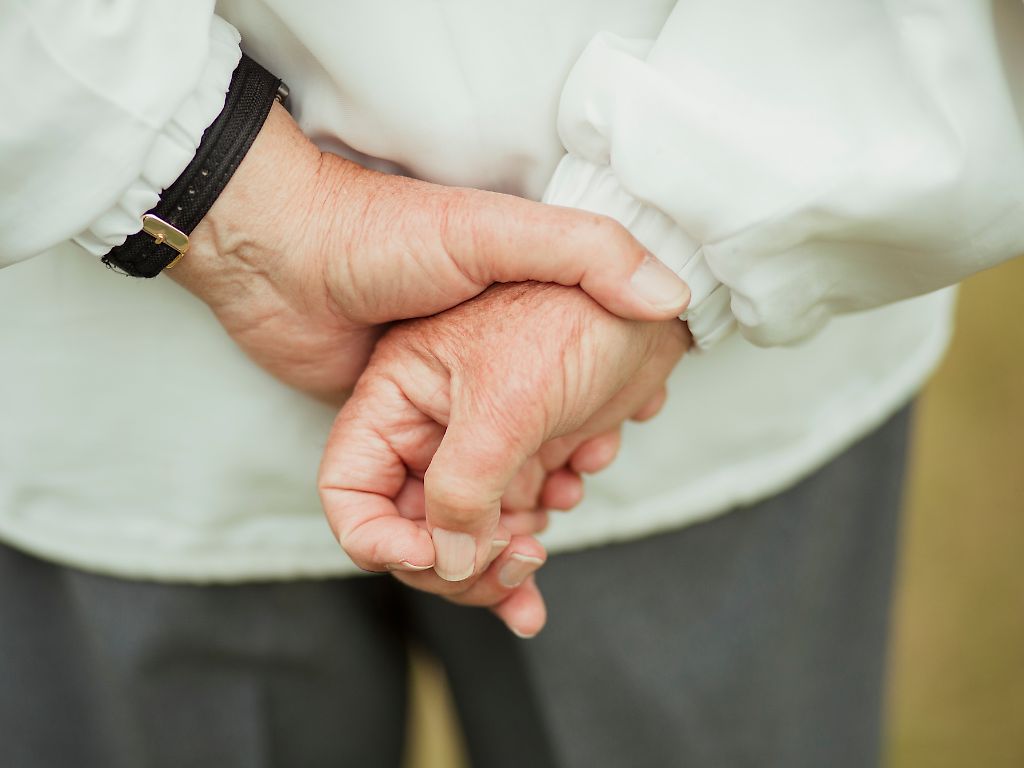
Some people walk with their hands clasped behind their backs. Others adopt this posture while thinking or observing their surroundings. The gesture is often associated with calmness, concentration, or authority. But can it really reveal something about a person’s personality or feelings?
As reported by the Brazilian news portal „O Globo,“ citing the Argentine newspaper „La Nación,“ scientific studies have examined the impact of different hand positions. The results show that the position of the hands can influence how others perceive a person. However, it says little about their actual thoughts or feelings.
A scientific study, published online in November 2022 in the journal „Lighting Research & Technology,“ focused on the perception of people in darkness.
Researchers K. Hamoodh, S. Fotios, and C. Cheal investigated which visual features influence pedestrians‘ sense of security.
For the experiment, 44 participants evaluated photographs of people who appeared to be moving in nighttime environments. Both the position of the hands and the visibility of the faces varied.
The participants were asked to assess how safe the depicted situations seemed to them.
The result: Individuals whose hands were behind their bodies were generally perceived as less safe in the shown situations than those with hands held at the sides or in front of the body.
However, another factor had an even greater impact on the assessment.
The study showed that the visibility of the face played a more significant role in the observers‘ sense of security than the position of the hands.
This study illustrates that people assess their surroundings based on multiple visual cues.
The position of the hands can indeed enhance or alter an impression. However, it alone is not sufficient to reliably assess a person.
It is also important to consider what the study actually measured. The researchers analyzed the perception of the observers and not the feelings or intentions of the photographed individuals.
Therefore, the results do not imply that people with hands clasped behind their back are particularly calm, confident, or tense.
Another scientific study, published in the journal „Cortex“ in 2021, dealt with a different aspect of body posture.
Researchers examined how different hand positions affect the processing and memory of verbal information.
Participants were asked to read sentences and then recall them. During this time, they held their hands either in front of their body or clasped behind their back.
The results showed that the position of the hands influenced the processing of sentences related to actions involving the hands.
Additionally, under certain conditions, participants had poorer recall of some nouns associated with such actions.
However, the study focused on language, memory, and brain activity. It does not provide any insights into the personality or emotional state of people who clasp their hands behind their back while walking.
In everyday life, body posture is often associated with traits such as confidence, composure, or authority.
Scientifically, such an interpretation cannot be confirmed based on the mentioned studies.
Someone who clasps their hands behind their back does not necessarily have to be particularly confident or relaxed. Nor can it be concluded that they are insecure, nervous, or have a specific intention.
The crucial point is that individual gestures do not have a clear psychological meaning.
The specific situation and other visible behaviors must also be considered when people assess the body language of their counterpart.
The two studies illustrate different connections between posture, perception, and cognitive processes.
While the study from 2022 shows that the position of the hands can influence others‘ assessment of security, the 2021 study points to connections between hand posture and language processing.
A reliable statement about a person’s character, thoughts, or feelings cannot be derived from this single gesture.
Someone who clasps their hands behind their back while walking may simply find this posture comfortable.
The key insight is therefore: Body language does influence the impression people make on others. However, a single movement does not automatically reveal what is going on inside a person.
(VIENNA.AT)
This article has been automatically translated, read the original article .

