


Stubborn Dirt in Dish Towels? This Helps with Cleaning
Gestern, 12:35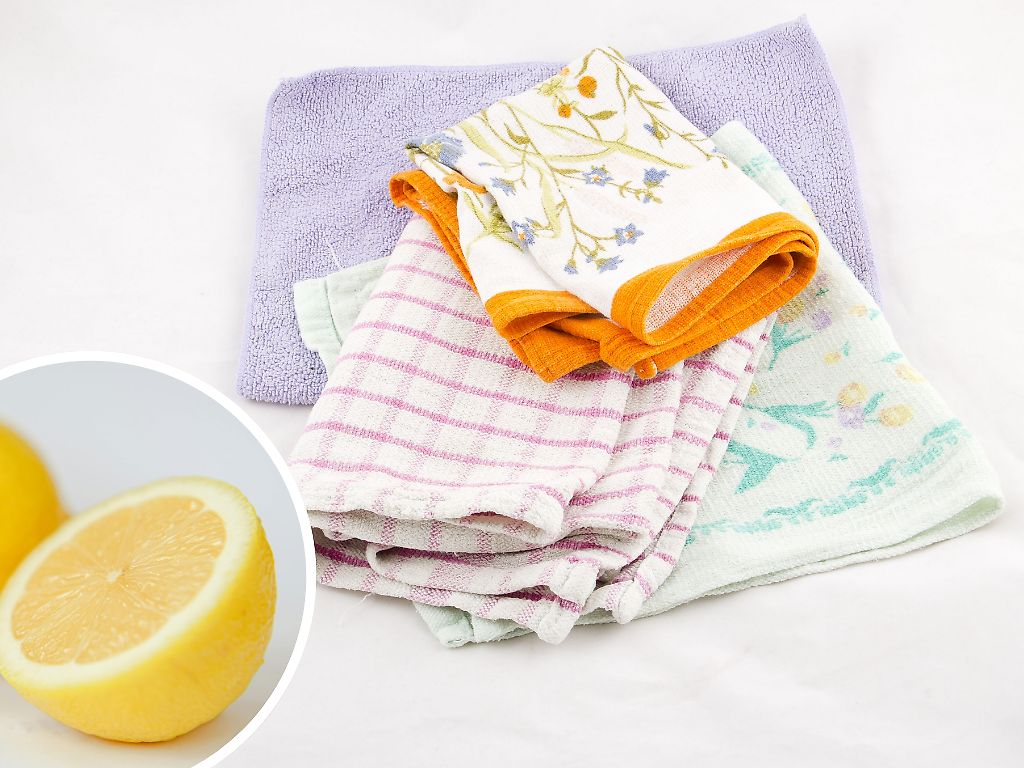
Dish towels are among the most frequently used textiles in the kitchen. They dry dishes, absorb moisture, and often come into contact with food residues or grease. Over time, stains and unpleasant odors can become embedded. A simple household trick with two everyday ingredients is said to help get dirty kitchen towels clean again.
All that is needed is water, natural soap, and lemon juice. The dish towels are boiled in the mixture before the actual wash cycle. This is supposed to help especially with stubborn dirt.
In the kitchen, dish towels regularly come into contact with various residues. In addition to water and food residues, grease and other dirt can also accumulate in the fibers.
A regular machine wash removes many of these residues. However, for particularly heavily soiled towels, an additional pre-treatment may be advisable.
As reported by the Brazilian health portal Minha Vida, a method is recommended in which dish towels are heated in a mixture of water, lemon juice, and natural soap before washing.
The method does not require any special cleaning products. In addition to a pot of water, only lemon juice and natural soap are used.
The soap helps to loosen grease and dirt from the textile fibers. The hot water supports this process. The lemon juice is used additionally to reduce unpleasant odors.
The key is mainly the combination of heat and soap. Reliable disinfection by lemon juice alone is not scientifically proven.
First, a sufficiently large pot is filled with water. Then, natural soap and some lemon juice are added.
Once the water boils, the dirty dish towels are carefully placed inside. According to the described method, they remain in the hot water for about ten to 15 minutes.
During this time, grease and other residues can be released from the fibers. The discoloration of the water can be attributed to dissolved dirt.
After boiling, the towels need to cool down sufficiently. They can then be cleaned in the washing machine as usual.
However, it is important to check the care label beforehand. Not every material can withstand boiling water. Particularly delicate fabrics or textiles with special coatings can be damaged by the heat.
After pre-treatment, the described method suggests a normal wash cycle at about 40 degrees. Whether this temperature is sufficient depends on the degree of soiling and the hygienic requirements.
For dish towels that have come into contact with raw food or heavily soiled surfaces, thorough cleaning is particularly important.
For washable cotton towels, a wash cycle at 60 degrees can be sensible, provided the care label allows it. An appropriate detergent should be used.
Boiling with lemon and soap is thus a possible pre-treatment, but does not fundamentally replace a hygienically suitable machine wash.
After washing, dish towels should dry as quickly and completely as possible. If they remain damp for a long time, unpleasant odors can develop.
Good air circulation helps to remove residual moisture from the fibers. Those who have enough space can let the towels dry outdoors.
Direct sunlight can additionally help reduce certain microorganisms. However, it does not replace thorough cleaning.
The pre-treatment with hot water, soap, and lemon juice is particularly suitable for robust, heavily soiled dish towels. Especially with greasy residues, soaking or boiling with soap can be helpful.
This method should be avoided for delicate materials. It should also be noted that additional heating requires water and energy.
For everyday kitchen use, regular machine washing with suitable detergent remains the most important measure. Heavily soiled dish towels should not be used unnecessarily long.
(VIENNA.AT)
This article has been automatically translated, read the original article .

