




Two Bird Halls at NHM Vienna Present Themselves "Freshly Molted"
2-10-2026, 03:25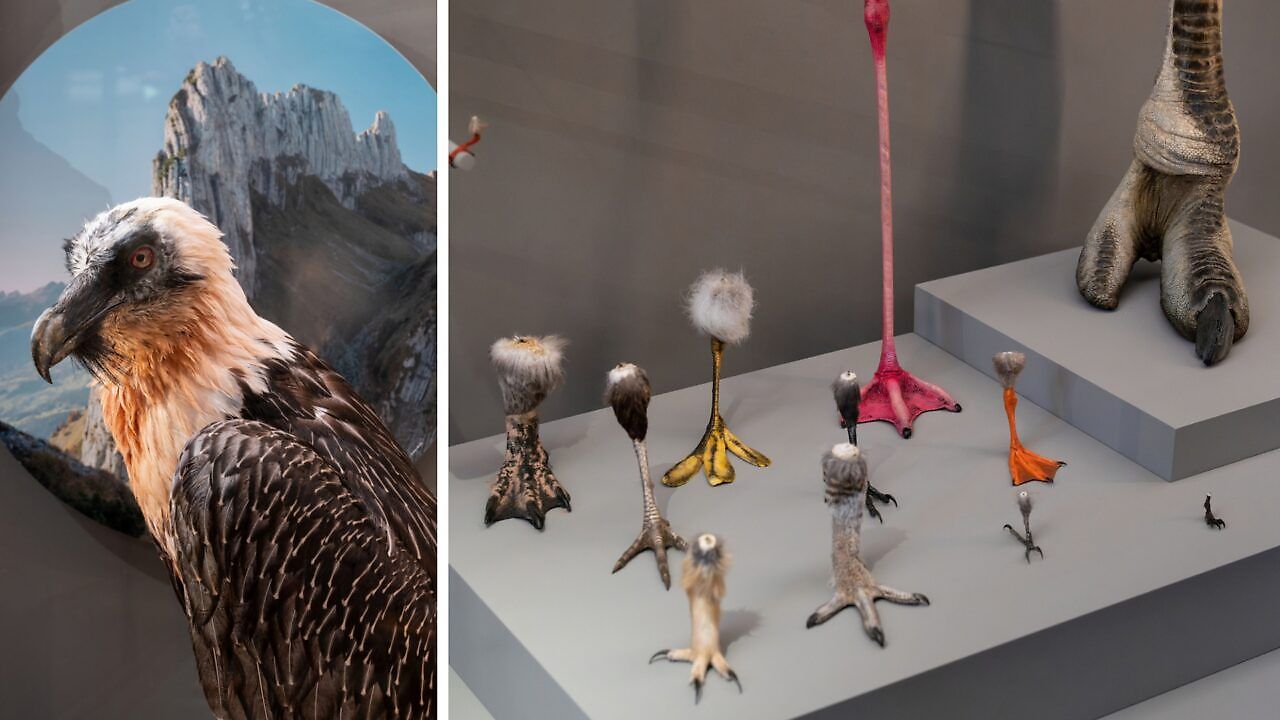
„Beautiful and important“ are the birds that come or fly in manifold shapes and colors, as Katrin Vohland, NHM Director General, said on Tuesday during the presentation of the elaborately restored and newly designed rooms 29 and 30 on the second floor of the building on the Vienna Ring. This group of animals is particularly „closely connected with our actions.“ This is also evident in the fact that human influence affects them in many places: For example, pesticides from agriculture or the drought favored by human-induced climate change this year in the country, which further promotes the endangerment of some species.
Accordingly, they want to show birds and their achievements in various habitats. The approach, which at least partially replaces the systematic-evolutionary presentation in terms of the exhibition of the comprehensive bird collection of the NHM, begins in the first two of the museum’s total of four bird rooms. According to the „master plan“ for all zoological and subsequently the botanical rooms of the NHM, the other two rooms (rooms 31 and 32) are to follow in the fall of 2027, Vohland explained.
In the new room 29, one can now begin the journey through the bird world with an introduction to the anatomy of the diverse animals. They want to enable visitors to „gain appreciation for birds,“ said Swen Renner, curator of the NHM bird collection. Since the animals often also function as symbols of sympathy, one can well illustrate connections in the habitats. Thus, there are 22 habitats from Central Europe in the room, allowing exploration of a considerable portion of Austria’s entire bird diversity from the mountains to the steppes, but also in settlements and on agricultural land.
Whereas previously 880 objects could be viewed, there are now 490 in room 29 and 600 bird specimens in room 30, as Christof Viehauser, collection manager of the NHM bird collection, explained. Considering how much more is still in the collection, the selection of objects and the choice of displayed habitats was difficult. They agreed on another 26 major habitats on all continents, including Antarctica, in room 30. This was done with great attention to detail – for example, if one pays attention to the drag mark of an ostrich egg in the depiction of an Egyptian vulture plundering a nest in a large showcase, as Vohland pointed out during the room tour.
The fact that badger hair is found on the neck of an ostrich will probably escape even the most trained eye, but it shows the tricks used in restoration, as Robert Illek, head of zoological preparation, explained. Around 1,000 objects were „very elaborately“ restored, 30 completely newly prepared. In the process, it was quickly discovered that about 50 percent of the bird eyes were actually incorrectly attached.
In addition to scientifically as accurate a representation as possible, they also want to „offer something to the heart and present the specimens vividly,“ emphasized NHM scenographer Julia Landsiedl. The result is now „three-dimensional hidden object pictures in a positive sense,“ which can also be visited on Wednesday between 8:00 and 9:00 a.m. as an „Early Bird“ before the museum opens, if one integrates a visible bird accessory into the outfit.
(APA/Red.)
This article has been automatically translated, read the original article .

