




ÖAMTC Warns of More Wildlife Accidents in Autumn
25-09-2026, 06:55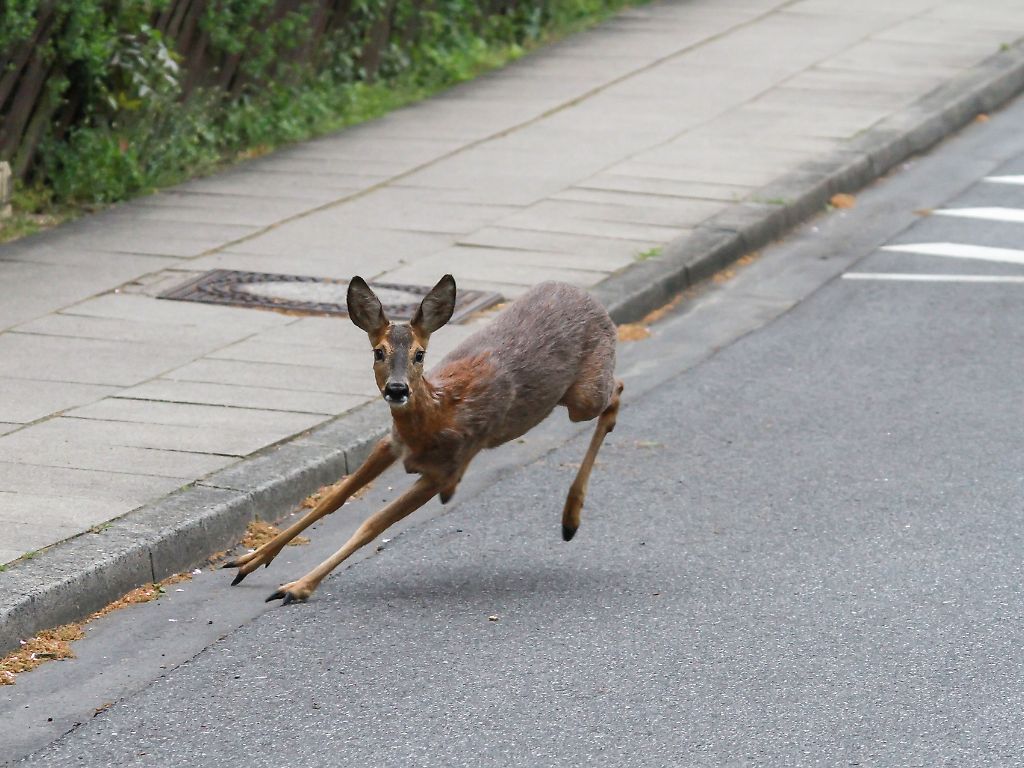
With autumn, the days become shorter. As a result, dusk more frequently falls during the morning and evening hours when many people are on their way to work or home. At the same time, deer, stags, wild boars, and other wildlife are particularly active.
The ÖAMTC driving technique therefore recommends paying special attention on rural roads and in areas with wildlife crossings. According to the ÖAMTC, in 2025 there were 283 accidents involving wildlife in Austria, in which 322 people were injured.
If an animal suddenly appears on the road, many drivers instinctively react with a swerving maneuver. However, this can become dangerous. On roads with oncoming traffic or obstacles at the roadside, there is a risk of a more severe accident.
Roland Frisch, chief instructor for cars at ÖAMTC driving technique, advises in such situations to prioritize one’s own safety. If the braking distance is no longer sufficient, according to Frisch, it is generally safer to brake hard and maintain the lane.
Swerving should only occur if it does not endanger other road users. It is important to hold the steering wheel firmly and brake hard in a controlled manner.
In areas with wildlife crossing warning signs, speed should be reduced and readiness to brake should be maintained. The ÖAMTC also recommends a greater safety distance from the vehicle in front.
The surroundings should also be closely observed. This involves not only one side of the road but both road edges. If an animal appears at some distance, the ÖAMTC recommends dimming the lights and honking.
Extra caution is also advised because wildlife often travels in groups. After spotting one animal, more animals may follow.
If a collision cannot be avoided, the vehicle should be stopped in a safe place. The hazard warning lights should be turned on, and a safety vest should be put on.
The accident site must be secured with a warning triangle. Injured persons should be cared for. After that, the police should be notified. If a gamekeeper is known, they can also be contacted.
According to ÖAMTC, this also applies if an injured animal runs away after the collision.
According to ÖAMTC, there is no accident reporting fee for reporting a wildlife accident, which is colloquially referred to as a blue light tax.
Injured or killed wild animals must not be touched or taken away. ÖAMTC lawyer Martin Hoffer points out that this can have legal consequences under certain circumstances.
Legally, it depends on what triggers the braking. According to the road traffic regulations, drivers are generally not allowed to brake sharply without reason if it endangers the following traffic.
For larger wild animals such as deer, stags, or wild boars, emergency braking is generally considered justified according to ÖAMTC. The mobility club cites the significant danger to vehicle occupants as the reason.
The situation can be assessed differently for smaller animals like hares or hedgehogs. If a rear-end collision occurs due to emergency braking for a small animal, the person braking may be partially at fault according to ÖAMTC. This can also apply if the following traffic did not maintain a safe distance.
According to the table recorded by Statistics Austria and prepared by ÖAMTC, 283 accidents involving wildlife were registered across Austria in 2025. In 2024, there were 314 cases. Thus, in 2025, a total of 31 fewer cases were reported than in the previous year.
Most of the 283 registered wildlife accidents in 2025 occurred in Lower Austria with 85 cases. Following were Upper Austria with 69 and Styria with 54 cases. In Carinthia, 32 cases were recorded.
According to ÖAMTC, 322 people were injured in wildlife-related accidents in Austria in 2025. The table itself lists the number of accidents and not the number of injured persons per federal state.
The ÖAMTC protection letter can also cover the financial consequences of a wildlife accident. If a vehicle protected by the protection letter is damaged in a wildlife accident in Austria or in the foreign validity area of the protection letter, ÖAMTC claims to cover 80 percent of the repair costs or the deductible of the comprehensive insurance.
The benefit is limited to a maximum of 600 euros.
Further information about the protection letter:
(VIENNA.AT)
This article has been automatically translated, read the original article .

