




Time-Out Shared Apartment, Event Arena, Health: This Happened in the Vienna City Council
23-09-2026, 16:55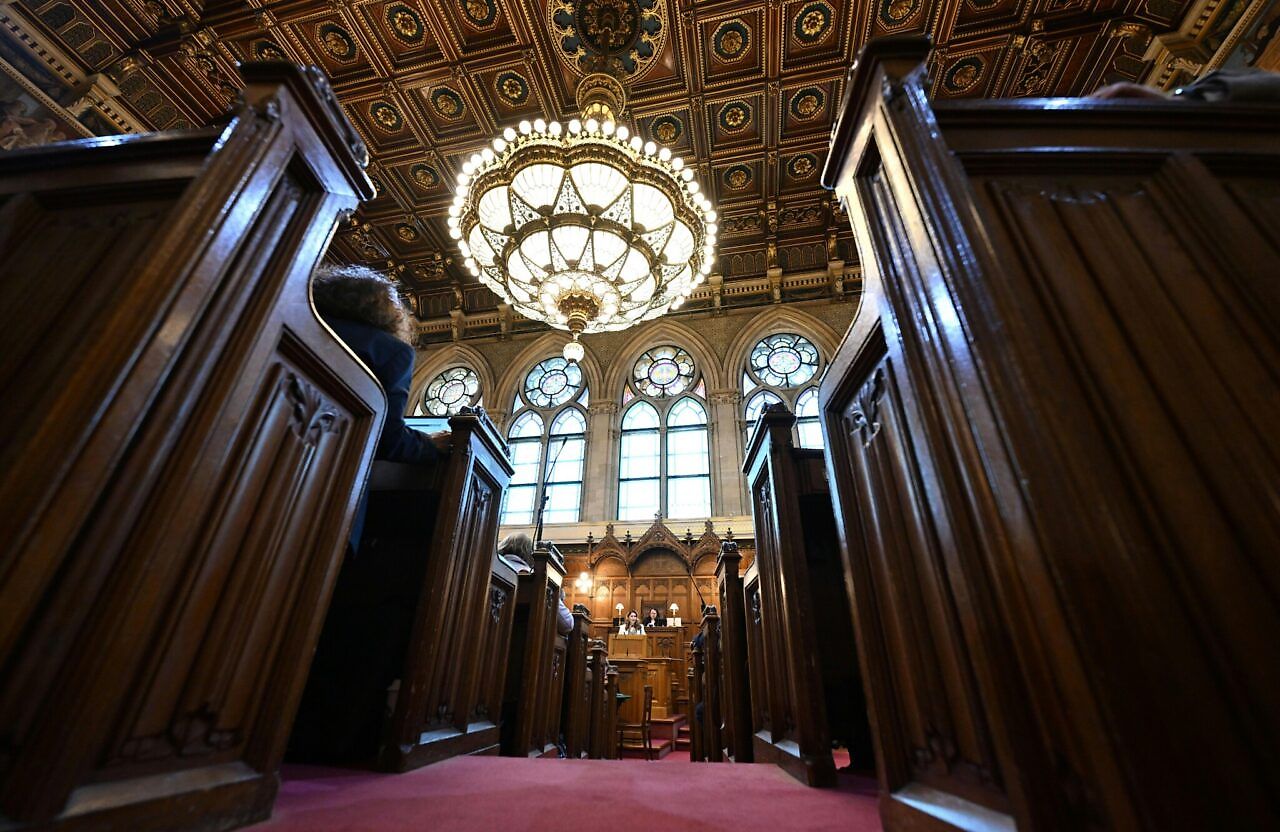
In the Vienna City Hall, the 18th Vienna City Council of the current election period convened on Wednesday. During the question hour, topics included the „Time-Out WG“ for delinquent children, a new competence center for post-viral syndromes, and the current status of the planned event arena in St. Marx. Later, there was a debate on democracy education and women’s policy.
The „Time-Out WG“ for under 14-year-olds, who repeatedly stand out due to violence or criminal acts, was particularly in focus since it has been in operation this year.
Councilor for Education and Youth Bettina Emmerling (NEOS) reported that the first child has since left the facility. After the care, the child transitioned to a follow-up measure. At the same time, Emmerling admitted that this outcome would not be successful for all children. The intensive care is designed for six to twelve weeks.
In regular operation, according to Emmerling, up to 16 children per year are to be cared for. According to her, around 60,000 euros per child are budgeted. Currently, there are up to ten possible candidates.
Emmerling also stated in the city council that she personally does not consider the currently used Residential Care Act to be the appropriate basis. Before admission, numerous prerequisites must be met, including the exhaustion of other measures and a judicial decision.
The procedure is therefore complicated and associated with longer lead times. Emmerling therefore advocated for a nationwide uniform legal solution. According to her, the „Time-Out WG“ is still the only option for such a measure under the current legal situation.
The legal issue has recently been the subject of public discussions. The city had previously stated that the facility is operated based on the Residential Care Act.
City Councillor for Health Peter Hacker (SPÖ) also provided an outlook on the planned Competence Center for Post-Acute Infection Syndromes (PAIS).
Planned are, among other things, differentiated diagnostics, individual therapy planning, regular check-ups, and close cooperation with hospitals, general practitioners, rehabilitation centers, as well as physiotherapists, occupational therapists, and social workers. In crisis situations, home treatment should also be possible.
The city and social insurance are jointly supporting the project. A suitable property has already been found, but the necessary renovation is expected to take until 2028. Therefore, a trial operation at a provisional location is to begin in the first half of 2027.
There is still no start of construction for the planned Wien Holding Arena in St. Marx.
Finance and Economic City Councillor Barbara Novak (SPÖ) explained that the project is still in a preparation and negotiation phase. Economic and architectural questions are currently being clarified with the project partner.
A construction project is not yet ready for submission, and a building permit is also not available. According to Novak, payments to the builder have not yet been made, as these are tied to the building permit.
The arena is planned to accommodate up to 20,000 people. Novak also reaffirmed the goal that no additional costs should arise for the city.
Another inquiry concerned Vienna’s waste disposal infrastructure.
Climate and Personnel City Councillor Jürgen Czernohorszky (SPÖ) referred to the city’s current four waste incineration plants. According to him, they have a combined capacity of around 780,000 tons per year.
While the amount of residual waste is decreasing, it is growing in relation to the increasing total population. Therefore, Vienna wants to make early decisions about future infrastructure. In parallel, according to Czernohorszky, the city is focusing on waste prevention, reuse, and recycling.
The Vienna Waste Management Plan, including the Waste Prevention Program 2025 to 2030, comprises 161 measures.
In the Current Hour, the topic „A Resilient Democracy Needs the Best Education“ was discussed.
The factions set different priorities. NEOS and SPÖ emphasized media literacy, dealing with algorithms, artificial intelligence, false reports, and manipulated videos. The Greens highlighted not only education but also democratic practice and social participation.
The ÖVP and FPÖ, among others, addressed issues of national defense, basic competencies, integration, and various socio-political topics. Parts of the debate were accordingly strongly politically influenced.
Another focus was on the annual funding for the Women’s Service Vienna.
This included the financing of women’s and girls‘ counseling centers, violence prevention, childcare, equality, and the compatibility of work and family. The Greens warned of possible consequences of budget consolidation for social organizations and called for, among other things, securing funding over several years.
After the extensive debate, the new funding guidelines for the „Annual Funding Women’s Service Vienna“ were approved with the votes of SPÖ, NEOS, and ÖVP. Another motion by the Greens to raise awareness among staff in the Vienna Health Association was unanimously assigned to the Health Committee.
Health policy issues were also addressed. Several delegates pointed out possible gender-specific differences in medicine. A Green councilor discussed her own endometriosis condition and spoke of structural problems in research and care. A joint motion by SPÖ, NEOS, and Greens against structural sexism in medicine and healthcare received a majority.
The NEOS referred, among other things, to the gender pay gap, violence against women, and the importance of men’s counseling and prevention.
Subsequently, additional funding for QWIEN, the association for queer culture and history, sparked discussions. The ÖVP criticized the further construction cost subsidy and referred to the handling of taxpayers‘ money. The Greens and SPÖ justified the additional costs, among other things, with necessary structural and safety-related measures at the new location. The FPÖ also criticized the funding and its handling. It was finally approved with the votes of SPÖ, NEOS, and Greens.
The meeting of the Vienna City Council once again demonstrated the range of municipal politics: It dealt with specific projects such as the time-out shared apartment, the planned PAIS center, and the event arena – but also with the question of how Vienna wants to handle democracy education, equality, and social support. For several projects, key questions remain open for the time being.
(Red)
This article has been automatically translated, read the original article .

