



Unusually late in the year - the main birthing season is in spring and summer - the two young animals were born healthy and lively within a few days, the zoo reported on Friday.

Rare Scimitar-Horned Oryxes: Double Offspring at Zoo Schmiding
3-10-2025, 10:45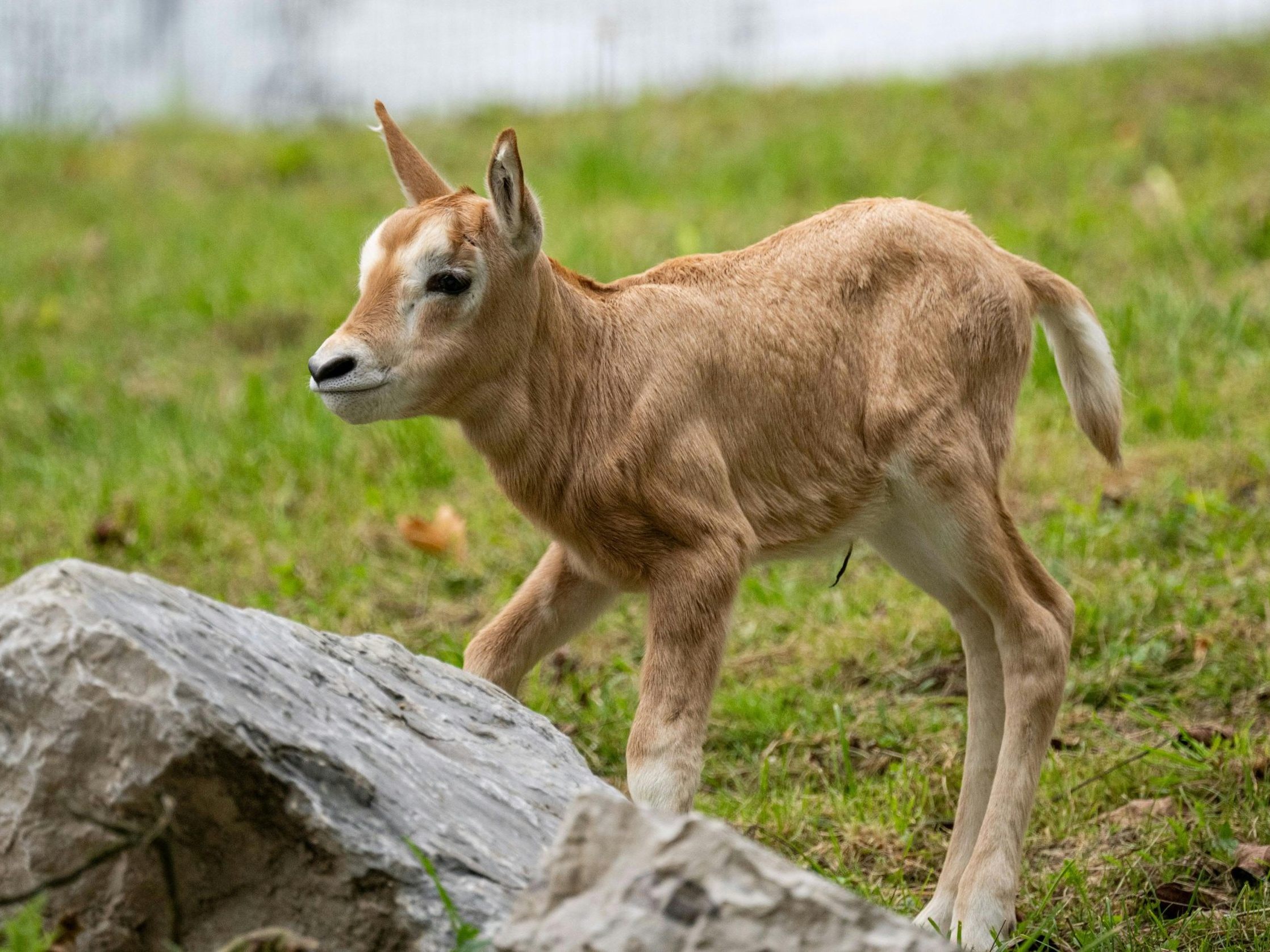
At Schmiding Zoo in Krenglbach near Wels, two scimitar-horned oryx were born just in time for the International Day of Wildlife Conservation on Saturday.


Scimitar-horned oryx young are hard to spot
The little ones are cute - and hard to spot. This is because the mothers place their young away from the herd in tall grass, where they are well camouflaged. To observe them, you need - still - a bit of patience. Day by day, the little ones become bolder and more curious and venture out of their hiding places. The birth of the two oryx significantly contributes to the preservation of the species. "Such breeding is an important contribution to wildlife conservation and demonstrates the role modern zoos play in preserving endangered animal species," emphasized zoo director Andreas Artmann.
The scimitar-horned oryx, also known as Oryx dammah, was hunted for decades because of its famous 1.2-meter-long horns and was already considered extinct in the wild. However, thanks to internationally coordinated breeding programs (EEP) and reintroduction projects in North Africa, there are currently smaller herds in the wild again, and the population of free-living animals is slowly but steadily increasing. The scimitar-horned oryx originates from North Africa and is perfectly adapted to life in dry savannas.
(APA/Red)
This article has been automatically translated, read the original article .

