



The Chamber of Labour (AK) and the Austrian Trade Union Federation (ÖGB) propose that a billion euros should be raised each year through a tax increase and an additional contribution by the bank levy until 2029. This should be stipulated in a constitutional provision.

Bank Levy: AK and ÖGB Demand One Billion Per Year from Banks
29-01-2025, 11:44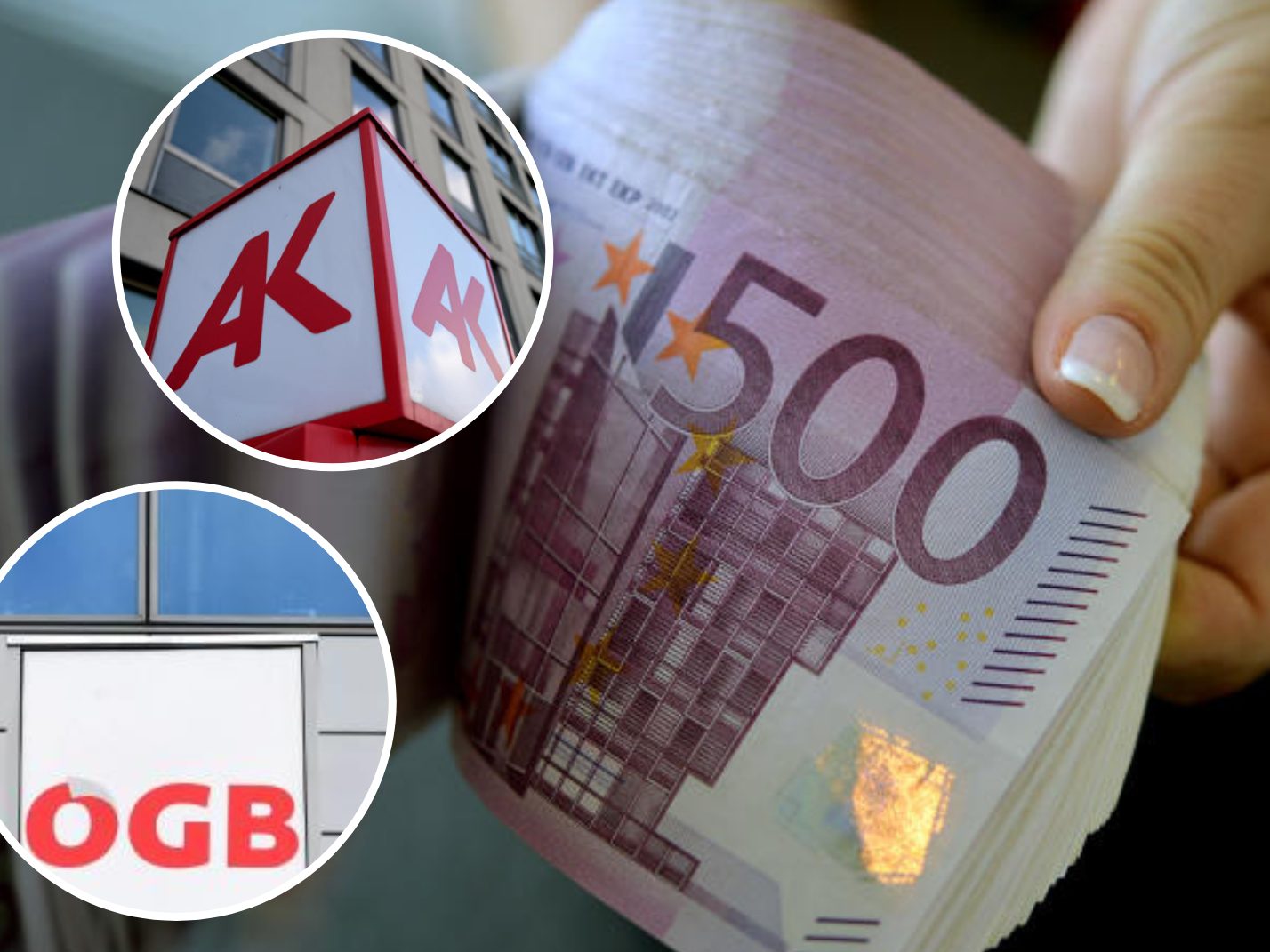
The AK and ÖGB once again demanded a financial contribution from banks towards budget consolidation on Wednesday. They also receive support for their demand for a bank levy from the SPÖ and OeNB Chief Holzmann.
Bank Levy: AK and ÖGB Point to Record Profits of Banks
The AK and ÖGB justify their demand with the "historical record profits" of the banks and the fact that they have only partially repaid the support of taxpayers during the banking crisis. In the past three years alone, Austrian banks have made a total profit of almost 30 billion euros, calculated ÖGB Federal Managing Director Helene Schuberth. At the same time, branches are being closed and employees are being laid off. And above all: If taxpayers had not helped the banks during the financial crisis, the national debt would now be ten billion euros lower. Furthermore, citizens have helped the banks with guarantees during the Corona pandemic. And on top of that, the banks have only slowly passed on falling interest rates to customers.
Half of EU Countries Already Have Bank Levy
"A bank levy is a matter of justice, it does not burden the economy and is more than justified in view of the high profits," emphasized Schuberth. The banks have significantly increased dividend distributions or carried out share buybacks, instead of building up equity to a greater extent. The argument that increased bank taxation makes loans more expensive for customers, as argued by opponents of the levy, does not correspond to the experiences made with a bank levy introduced 15 years ago. AK expert Dominik Bernhofer reminded journalists that almost half of the EU countries have introduced new taxes for financial institutions in response to bank profits.
Currently, the revenue from the bank levy introduced in Austria in 2011 is only 152 million euros (until 2023). Between 2011 and 2016, the revenue was still between 500 and 600 million euros. The Chamber of Labour draws a comparison: "The AK Dividend Report shows based on publicly available data that the distributions of listed companies have significantly increased. For the five banks on the stock exchange (Erste Group, Raiffeisen International, BAWAG, Bank Austria and Oberbank), this means a total of 1 billion euros in profit distribution in 2021, as well as 1.7 billion euros in 2022 and 2.8 billion euros in 2023."
The 2-stage model of AK and ÖGB for a bank levy envisages an increase in the existing tax rates to 0.05 percent up to 20 billion euros or 0.1 percent above that in the first phase. This would yield a tax revenue of approximately 500 million euros and could be implemented within the existing constitutional framework, believes the AK. In stage 2, a temporary special contribution amounting to 100 percent of the revenue from stage 1 is to be collected over 5 years. To legally secure the measure, the special contribution should be designed as a constitutional provision.
SPÖ Sees Bank Levy as a "Mandate of Reason"
Approval came from the SPÖ. "A substantial bank levy - as demanded by AK and ÖGB today and as proposed by the SPÖ in the government negotiations", is a "mandate of budgetary and social reason", said budget spokesman Jan Krainer. Thus, the banks in the crisis "made the highest profits of all time, while everyone else paid, not least for the high credit interest rates", it said in a statement.
OeNB Chief Holzmann Sees Bank Levy as a "Sensible Choice"
Unsurprisingly, the banking sector warns against a bank levy. Such a levy would probably further throttle the already limited credit supply, said Raiffeisen Research Director Gunter Deuber on Tuesday. The high profits of domestic banks in recent years are due to the high proportion of variable loans and also to special effects. Wifo banking expert Thomas Url, on the other hand, said that a special tax for only one sector would rather harm the location and could deter investors. The industry-related Agenda Austria emphasized yesterday that it is difficult to single out a sector and impose a special tax on it.
Outgoing National Bank Governor Robert Holzmann saw this differently on Tuesday. He sees a bank levy for budget consolidation as a "sensible choice". The bank levy also finds advocates at the union-related Momentum Institute: "The banks were one of the few big winners of inflation and high interest rates in recent years. A reasonable contribution from their windfall profits to the austerity package is overdue." And this is how it looks in other EU countries: Belgium, the Netherlands and Slovenia tax bank liabilities similar to the Austrian stability levy. Access to net interest income is available in Italy and Lithuania. Additional profit taxation applies in Spain, the Czech Republic and Slovakia.
(APA/Red)
This article has been automatically translated, read the original article .

